
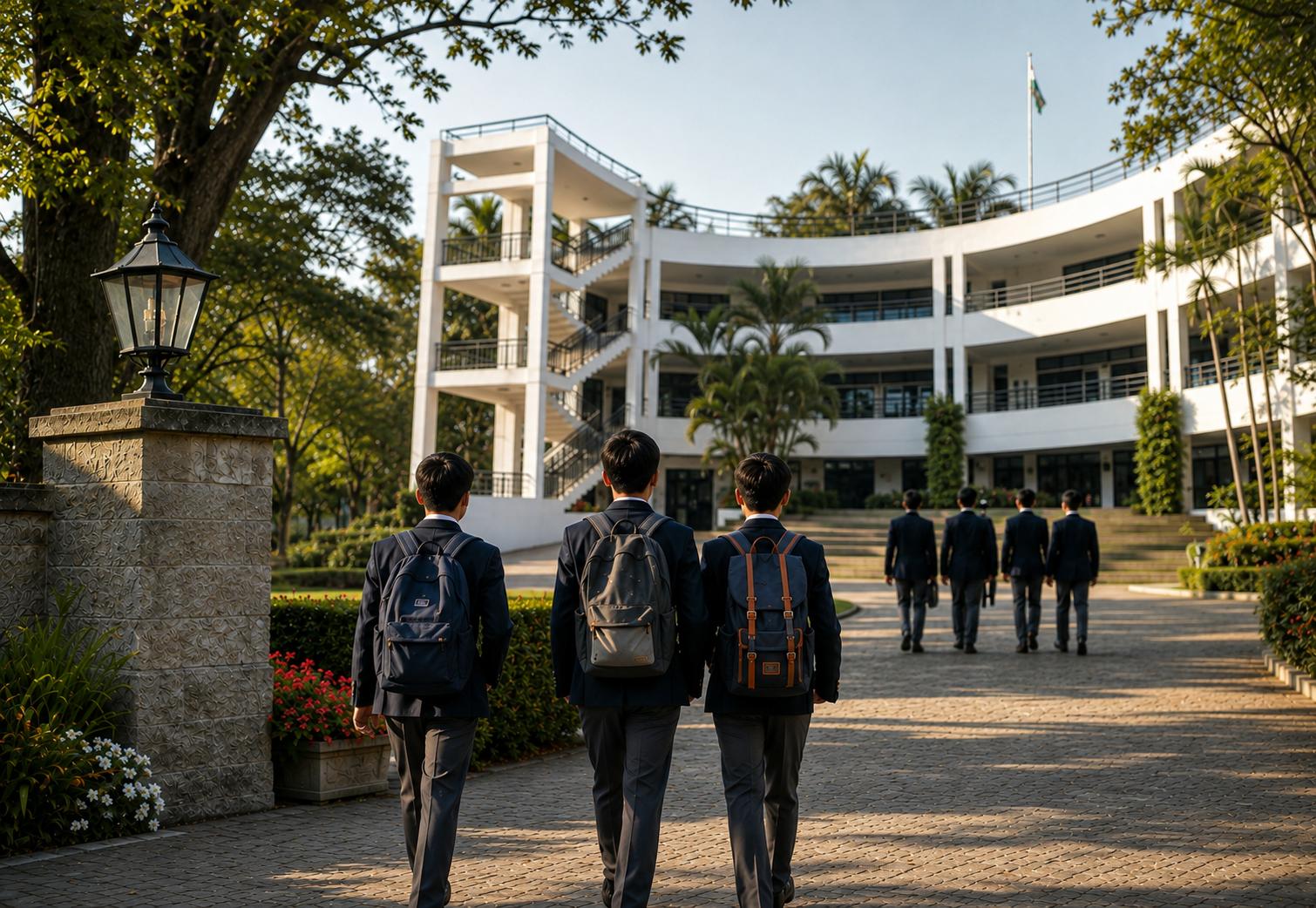
Top Boarding Schools in India
Choosing where your child will spend their most formative years is one of the most important decisions a family can make. A boarding school offers something a regular day school rarely can: a structured, full-time environment where learning, discipline, and personal growth happen together. India is home to some of the world’s oldest and most respected residential institutions, with options spanning every state, budget, board, and teaching philosophy.
This guide covers the Top Boarding Schools in India — what to look for, how to compare them, and how to find the right fit for your child. Whether you want a co-ed hill-station campus, a girls-only institution, a military school, or an international program, understanding your options makes this decision far more manageable.
Explore This Guide
Jump to the section you need and quickly compare boarding school options, locations, facilities, fees, and selection guidance.
What Is a Boarding School and Why Do Parents Choose One?
A boarding school is a residential institution where students live on campus through the academic term. Meals, study periods, sports, and rest follow a structured daily schedule. This full-time setup builds discipline and independence in a way that few day schools can replicate.
The model is not new. India’s residential school tradition draws from the ancient Gurukul system, where learning, daily life, and character development were inseparable. Modern boarding schools carry that spirit forward combining academic rigor with a lived community that shapes students around the clock.
Parents choose the best residential schools in India for several clear reasons:
- Focused academics. Fixed study hours and resident teachers keep students consistently on track.
- Life skills and independence. Living away from home builds self-reliance, time management, and maturity early.
- Peer networks that last. Friendships forged on campus often carry through careers and life.
- All-round development. The best schools balance academics with sports, arts, and leadership activities equally.
- Peace of mind for busy families. For working parents or those posted in different cities, a school with hostel facility removes the daily pressure of commutes, tuition supervision, and after-school management.
- A stable home base during mobility. For NRI families, expat parents, and professionals who relocate frequently for work, a boarding school provides children with a consistent, supportive environment regardless of where their parents are posted. Students build routines, relationships, and a sense of belonging that stays intact even when family circumstances shift.
Boarding schools in India serve students from as young as Class 1 all the way through Class 12. Some families enroll children in junior residential programs, while others wait until secondary school. The right time depends on your child’s maturity and your family’s circumstances.
Boarding School vs. Day School: Key Differences
For families navigating relocation or demanding careers, the choice between a boarding school and a day school is worth understanding clearly. Both can offer strong academics, but the experience and what it builds in a child differs significantly.
For NRI families and expats moving to or from India, boarding schools offer a particularly meaningful advantage: your child gets a stable, nurturing home base while you navigate international careers, relocations, and time zone differences.
How to Compare Boarding Schools in India
With hundreds of institutions spread across the country, narrowing your list requires a structured approach. Before you shortlist any school, weigh these factors against your family’s needs:
A detailed list of schools in India filtered by board, location, and budget saves hours of research and helps you compare options fairly. Many educational portals now allow you to filter top residential schools in India by these exact parameters.
Top-Rated Boarding Schools Worth Knowing
While a complete school-by-school list deserves its own dedicated resource, a few institutions consistently appear at the top of any conversation about the best boarding school in India:
The Doon School, Dehradun is one of the most recognized names in Indian residential education. An all-boys school in the Himalayan foothills, it offers the IGCSE curriculum in Class 10 and the choice of ISC or IB in Classes 11 and 12. The school runs orientation programs specifically for NRI students to ease the transition into Indian routines and culture.
Mayo College, Ajmer is one of the oldest boarding schools in India, located amidst the Aravalli hills of Rajasthan. It offers CBSE and IGCSE curricula and draws students from across India and internationally. Its diverse student body and culturally rich campus make it a strong option for families seeking heritage alongside high standards.
Welham Girls’ School, Dehradun is among the top girls boarding schools in India, following the CISCE curriculum with a strong focus on academics, sports, and co-curricular depth. The school uses flipped classroom methods and ICT-enabled learning, and students participate in the International Award for Young People (IAYP) program.
Kodaikanal International School (KIS), Tamil Nadu is a co-educational IB school ranked consistently among the best residential schools in India. Its student body represents over 25 countries, making it one of the most internationally diverse campuses in the country an ideal environment for children with global exposure or those re-entering Indian education from abroad.
The International School Bangalore (TISB) offers IB in junior years and IGCSE for Classes 9 and 10, across a 140-acre campus with dedicated boarding facilities for boys and girls. It is well-regarded for pastoral care and co-curricular programming.
These schools represent just a starting point. The right choice depends entirely on your child’s needs, your family’s location, and the curriculum that serves their long-term goals.
Boarding Schools by Location
One of the most practical ways to narrow your search is by geography. Each region of India brings its own climate, culture, and academic character. Below is a breakdown of key regions and what they offer.
North India and Delhi NCR
The northern belt holds some of India’s most storied residential campuses. The best boarding school in north India is often found in hill stations like Dehradun, Mussoorie, Nainital, and Shimla. These locations offer cooler climates, sprawling green campuses, and a long tradition of academic excellence.
The Delhi NCR region offers a different experience urban proximity with modern facilities. Parents searching for a boarding school in Delhi with fees that fit a mid-range budget will find options at multiple price points. Many families also prioritize a boarding school in Delhi NCR with fees listed transparently online, so there are no hidden costs later.
For families with tighter budgets, low cost boarding schools in Delhi do exist and offer solid academics without the premium price tag. Public institutions also play a significant role a government boarding school in Delhi combines affordability with a structured residential setup. When comparing government schools in India against private alternatives, these institutions often punch above their weight on academic outcomes, particularly for students who qualify through merit-based admission.
Pune
Pune has earned its reputation as one of India’s most respected education hubs, and its residential schools reflect that standing. The best boarding school in Pune typically blends rigorous academics with a vibrant campus culture, drawing students from Maharashtra and beyond.
The city also has a strong tradition of discipline-focused education. A military boarding school in Pune integrates physical training, leadership development, and academic rigor in a structured daily routine. Army Public Schools and affiliated institutions in the Pune cantonment area also offer excellent residential programs for families connected to the armed forces.
Karnataka
Karnataka, particularly the Bengaluru and Mysuru corridor, offers an appealing mix of climate, infrastructure, and educational quality. The best boarding school in Karnataka is often found on large green campuses where students enjoy a balance of structured academics and outdoor activity. Beyond Bengaluru, schools in Coorg, Hassan, and the Nilgiri foothills offer smaller campuses with a more personal environment, an excellent option for younger students or those who thrive in quieter settings.
Other Key Locations
- Rajasthan: Heritage campuses and military-tradition schools, particularly around Ajmer and Jaipur.
- Maharashtra (beyond Pune): Nashik, Kolhapur, and Mahabaleshwar have quality residential options.
- Tamil Nadu and Kerala: Known for discipline-focused institutions with strong board results and regional character.
- Himachal Pradesh: Schools in Solan, Kasauli, and Dharamshala offer high-altitude campuses with a strong emphasis on outdoor education.
Sorting boarding schools in India this way helps you focus on realistic, accessible options rather than getting lost in a nationwide list of hundreds of institutions.
Types of Boarding Schools in India
India’s residential school landscape covers a wide range of models. Understanding each type helps you match the right environment to your child’s personality and long-term goals.
IB and International Schools
Families with global ambitions often choose an international curriculum. The top IB schools in India follow the International Baccalaureate framework, which prioritizes critical thinking, inquiry-based learning, and global-mindedness. These institutions are counted among the best international schools in India for their world-class standards, multilingual environments, and direct pathways to universities abroad. They are also particularly well suited for children returning from overseas schooling, since the IB and IGCSE curricula travel well across education systems.
ICSE Schools
The ICSE board is respected for its strong focus on English proficiency, analytical skills, and a well-balanced syllabus. The best ICSE school in India typically delivers in-depth, concept-led learning that prepares students well for competitive exams and undergraduate studies. Many of India’s oldest and most prestigious residential campuses operate under this board.
CBSE Boarding Schools
CBSE remains the most widely followed curriculum in India, and several residential institutions run excellent CBSE programs. These schools suit families who may relocate frequently and want curriculum continuity, or those aiming for engineering and medical entrance exams after Class 12.
Military and Army Schools
Discipline, fitness, and character-building define this category. An army school in India runs a structured daily program that combines academic study with physical training, drill, and a strong culture of accountability. Rashtriya Military School, Sainik Schools, and Army Public Schools across the country are leading examples.
Government Boarding Schools
Affordability matters, and public institutions fill a crucial gap. Government schools in India that offer residential facilities give bright students from all economic backgrounds access to quality education without the burden of heavy fees. The Navodaya Vidyalaya system is among the most successful of these programs, running fully residential schools across every district with strong academic outcomes and a merit-based admissions process.
Girls-Only Boarding Schools
India has a strong tradition of single-gender education for girls, and the options are excellent. The best boarding school for girls in India focuses on academics, safety, and holistic development in a supportive environment. Among the top girls boarding schools in India, several have operated for over a century and maintain outstanding records in board examinations, sports, and leadership programs. If you are specifically seeking the best boarding school in India for a girl, prioritize campuses with dedicated female faculty, secure hostel infrastructure, counseling support, and mentorship programs built around young women’s development.
Specialized Boarding Schools
Some children excel in focused, specialist environments. Specialized boarding schools in India cater to specific strengths and needs sports academies, performing arts schools, schools for gifted students, and programs for children with learning differences. These institutions design their entire daily routine around a particular area, giving students the depth of focus that a standard school cannot provide.
Boarding School Facilities and Campus Life
What happens between classes matters just as much as what happens inside them. When you visit any campus, take time to assess the boarding school facilities and campus life in detail. The strongest institutions get both right.
Hostels and Living Quarters
Start here. The best hostel in India for students is clean, well-supervised, safe, and genuinely comfortable. Look at dormitory or room sizes, bathroom facilities, laundry arrangements, and the student-to-warden ratio. Check night supervision policies and how medical emergencies are handled after hours.
Pastoral Care and Student Wellbeing
This deserves its own section, not just a line item. Strong pastoral care is one of the clearest markers of a school that actually looks after its students. It covers emotional support, mental health counseling, mentoring, and the systems in place when a student is struggling academically, socially, or personally.
For families where parents travel frequently or live abroad, pastoral care is especially important. A school with a genuine, well-staffed pastoral system acts as a reliable support structure in the absence of daily family contact. Ask who a student goes to if they are homesick, anxious, or having trouble with peers. A school that can answer that question specifically and confidently is one worth trusting.
Dining
Nutritious, hygienic, and regular meals are non-negotiable. Ask about menu variety, dietary accommodations, and whether a nutritionist is involved in meal planning.
Sports and Physical Education
Top residential schools in India typically offer cricket, football, basketball, swimming, athletics, and sometimes equestrian or adventure sports. Beyond facilities, look at the quality of coaching and whether students are entered into state or national competitions.
Academic Infrastructure
Well-equipped science and computer labs, a stocked library, quiet study halls, and access to digital learning tools distinguish good campuses from great ones. Smart classrooms and blended learning are now standard in leading institutions.
Health and Wellness
On-site medical staff, a sick bay, and a protocol for hospital referrals are essential. The best residential schools also employ counselors who support students’ mental health through the pressures of board exams and living away from home.
Extracurricular and Cultural Life
Clubs, debating societies, music and drama, cultural festivals, and community service projects round out the residential experience. A school with a full calendar of activities outside the classroom builds confident, well-rounded individuals.
A well-run school with hostel facility feels less like an institution and more like a second home. Campus life at the top residential schools in India is structured to develop not just academic ability, but character, confidence, and resilience. When comparing the best boarding school in India on facilities, remember that the right environment for your child depends far more on fit than on prestige.
Understanding Boarding School Fees
Fee structures across India’s residential schools vary enormously. At the high end, the most expensive school in India charges several lakhs per year, offering elite infrastructure, international faculty, global exchange programs, and exceptional facilities. At the other end, government-run and low-fee private schools make quality residential education accessible to families at every income level.
When budgeting for any boarding school, account for:
- Tuition and residential charges — the core annual fee
- Admission and registration fees — often a one-time cost
- Uniforms, textbooks, and stationery
- Travel costs — flights or train fares for holidays and half-terms
- Extracurricular and activity fees — sports, music, or specialist programs
- Medical and insurance charges
- Caution deposit — refundable, but requires upfront payment
Always request a complete, itemized fee schedule before enrolling. The best schools publish this transparently. Hidden costs discovered mid-year create unnecessary stress. If you are comparing a boarding school in Delhi with fees against one in Pune or Karnataka, factor in travel costs carefully they add up over an academic year.
For families on tighter budgets, merit scholarships, state government schemes, and community trusts can significantly offset costs at even high-quality institutions. Ask specifically about financial aid during the admissions process.
Red Flags to Watch for When Shortlisting Schools
Even well-ranked institutions can disappoint if you skip due diligence. Watch for these warning signs during visits and research:
- Reluctance to show hostel facilities. Any school that avoids a full campus tour during admissions is worth questioning.
- High staff turnover. Frequent changes in teaching or hostel staff often signal deeper management issues.
- Vague fee structures. Hidden or unclear charges are a common complaint among dissatisfied parents.
- Poor communication. If a school is slow or evasive in responding to your admissions queries, that pattern typically continues after enrollment.
- Overcrowded dormitories. Cramped living conditions affect sleep, health, and academic performance.
- No visible student counseling. Mental health support is no longer optional it is a marker of an institution that takes student welfare seriously.
Making Your Final Choice
A clear process makes this decision manageable. Start by defining your non-negotiables: board, budget, location, and the kind of environment where your child will actually thrive. Then build a shortlist from a reliable list of schools in India filtered by those criteria, and visit each campus in person before making any commitment.
During visits, talk to current parents not just the admissions team. Observe how students interact with each other and with staff. Notice whether the campus feels warm and lived-in or sterile and overworked. Ask to see a sample weekly schedule so you understand exactly how your child’s day will be structured.
The Top Boarding Schools in India are distinguished not just by rankings or facilities, but by how genuinely the institution invests in each student’s growth. A school that communicates clearly, answers your questions honestly, and actively welcomes parent involvement from day one is almost always a stronger choice than one that impresses only on paper.
The best residential schools in India share a consistent set of qualities: academic rigor, safe and comfortable living conditions, experienced and caring staff, and a culture that builds lasting character. Whether your preference is an international curriculum, a discipline-focused army school in India, a government program, or a specialist institution, the right choice is the one that aligns with your child’s strengths and your family’s values.
Final Thoughts
Enrolling your child in a boarding school is one of the most significant commitments a family can make. Done well, it pays back many times over. From the historic hill-station campuses of North India to the modern residential schools of Pune, Karnataka, and beyond, this country offers an extraordinary range of options for every kind of student and every kind of family.
Use this guide as your foundation. Sort boarding schools by location, understand the different types, study the full fee structure, and never skip the campus visit. Ask hard questions and trust your instincts as a parent.
With careful research, you will find one of the Top Boarding Schools in India one where your child not only learns, but genuinely grows into the person they are meant to become.
Related Links
The Definitive Guide to Moving to India: A Complete Roadmap for NRIs and Expats
Moving to India: A Helpful and Honest Guide for Newcomers in 2026
Moving to India – How to Make It a Memorable Experience
FAQ
1. Why do NRI and expat families choose boarding schools in India?
NRI and expat families choose boarding schools in India because they offer children a stable, supportive home base that stays consistent regardless of where parents are posted. This continuity is invaluable for families navigating international careers, frequent relocations, and time zone differences.
Boarding schools give these children:
- A consistent routine and sense of belonging even when family circumstances shift
- Lasting relationships and peer networks built through daily campus life
- Around-the-clock support from resident teachers, counselors, and staff
- Internationally recognized curricula that ease transitions between education systems
2. What international curriculum options are available in Indian boarding schools?
Indian boarding schools offer several internationally recognized curricula, including IB (International Baccalaureate), IGCSE, CBSE, and ICSE. Each serves different goals and future pathways.
- IB and IGCSE: Ideal for globally mobile families, these curricula prioritize critical thinking and travel well across education systems a strong fit for children returning from overseas schooling.
- ICSE: Known for its focus on English proficiency and analytical, concept-led learning.
- CBSE: India’s most widely followed board, well suited to families who relocate often or are preparing for engineering and medical entrance exams.
Choose the board that best aligns with your child’s long-term academic goals.
3. What is the difference between a boarding school and a day school?
The core difference is that a boarding school provides a structured, 24/7 residential environment, while a day school limits learning to school hours with support coming primarily from family at home.
Boarding schools build independence, self-reliance, and time management as students manage daily life on their own. They also offer deep, lasting friendships formed by living together, strong extracurricular integration, and on-site staff available around the clock. For NRI and mobile families, a boarding school offers a consistent environment regardless of parental location something a day school cannot match.
4. What pastoral care and emotional support do boarding schools provide?
Boarding schools provide pastoral care that covers emotional support, mental health counseling, mentoring, and structured systems for students who are struggling academically, socially, or personally.
Strong pastoral care is one of the clearest markers of a school that genuinely looks after its students. It is especially important for children whose parents travel frequently or live abroad. When evaluating a school, ask specifically who a student turns to when homesick, anxious, or facing peer difficulties a confident, specific answer signals a trustworthy institution.
5. What are boarding school facilities and campus life like in India?
Campus life in Indian boarding schools combines structured academics with rich extracurricular, cultural, and sporting activity, all supported by residential facilities designed to feel like a second home.
Key facilities to assess include:
- Hostels: Clean, safe, well-supervised living quarters with a sound student-to-warden ratio
- Sports: Cricket, football, basketball, swimming, athletics, and sometimes adventure sports
- Academics: Well-equipped science and computer labs, libraries, and quiet study halls
- Culture: Celebrations of language, festivals, and diverse regional and national backgrounds
- Health and safety: On-site medical staff, a sick bay, counselors, and clear emergency protocols
6. How much do boarding schools in India cost?
Boarding school fees in India vary enormously from several lakhs per year at elite institutions to affordable rates at government-run and low-fee private schools.
When budgeting, account for the full picture beyond core tuition:
- Admission and registration fees (often one-time)
- Uniforms, textbooks, and stationery
- Travel costs for holidays and half-terms
- Extracurricular and activity fees
- Medical and insurance charges
- A refundable caution deposit
Always request a complete, itemized fee schedule before enrolling, and ask about merit scholarships and financial aid, which can significantly offset costs.
7. How do I choose the right boarding school for my child?
Choose the right boarding school by defining your non-negotiables board, budget, location, and environment then shortlisting schools that match those criteria and visiting each campus in person before committing.
Weigh these key factors when comparing options:
- Board and curriculum aligned with your child’s future goals
- Location and ease of travel for weekends and holidays
- Fee structure with a full, itemized breakdown
- Facilities, including hostels, labs, and medical care
- Pastoral care and student welfare systems
- Student-to-teacher ratio for personalized attention
- Alumni network and long-term track record
- Safety and supervision policies
During visits, talk to current parents, observe student-staff interactions, and ask directly how the school supports children adjusting to a new culture or system.